Back to Notes from the journeyNotes from the journey / Milestone

6 October 2026 · NTU Singapore

Nobel Heroes
Forum 2026.

Four Nobel Laureates across Medicine, Chemistry, Economics, and Physics on one stage. A transformative afternoon at Nanyang Technological University exploring AI, longevity, and the enduring power of human curiosity.

Dr Fred Ramsdell (Medicine 2025)Prof Benjamin List (Chemistry 2021)Sir Christopher Pissarides (Economics 2010)Sir Konstantin Novoselov (Physics 2010)
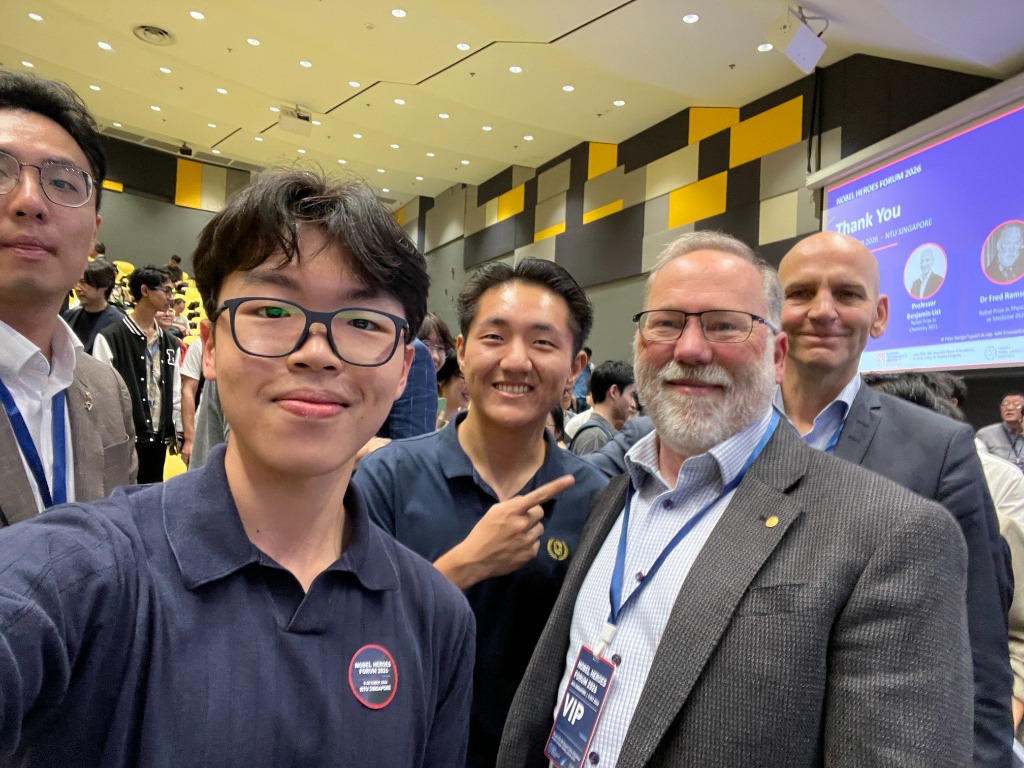
Justin Yu taking a selfie with Dr Fred Ramsdell and Professor Benjamin List at the Nobel Heroes Forum 2026.
A moment of quiet disbelief and immense gratitude.Posing with Dr Fred Ramsdell (Nobel Prize in Physiology or Medicine 2025) and Professor Benjamin List (Nobel Prize in Chemistry 2021) after the forum.
01 The Convergence

Four disciplines.
One auditorium.

When science solves real human suffering, it never stays within the borders of a single department.

On 6 October 2026, the Nanyang Technological University auditorium hosted the Nobel Heroes Forum 2026, organized in collaboration with the Lindau Nobel Laureate Meetings, Laureates City, and Symbiosis Science.

Sitting in that hall as an undergraduate studying Biomedical Sciences and BioBusiness on the NTU–Duke-NUS Pathways to Medicine programme, the atmosphere felt charged with something rare: four Nobel Laureates representing four distinct disciplines—Medicine, Chemistry, Economics, and Physics—gathered not to reminisce about past awards, but to confront humanity’s shared future.

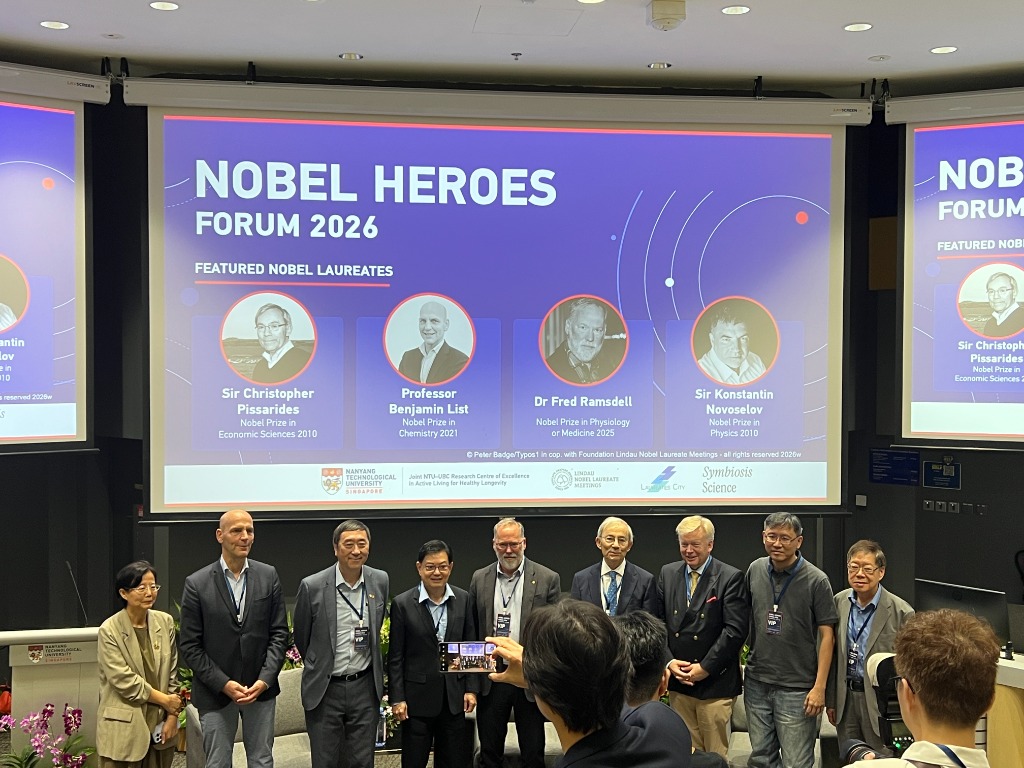
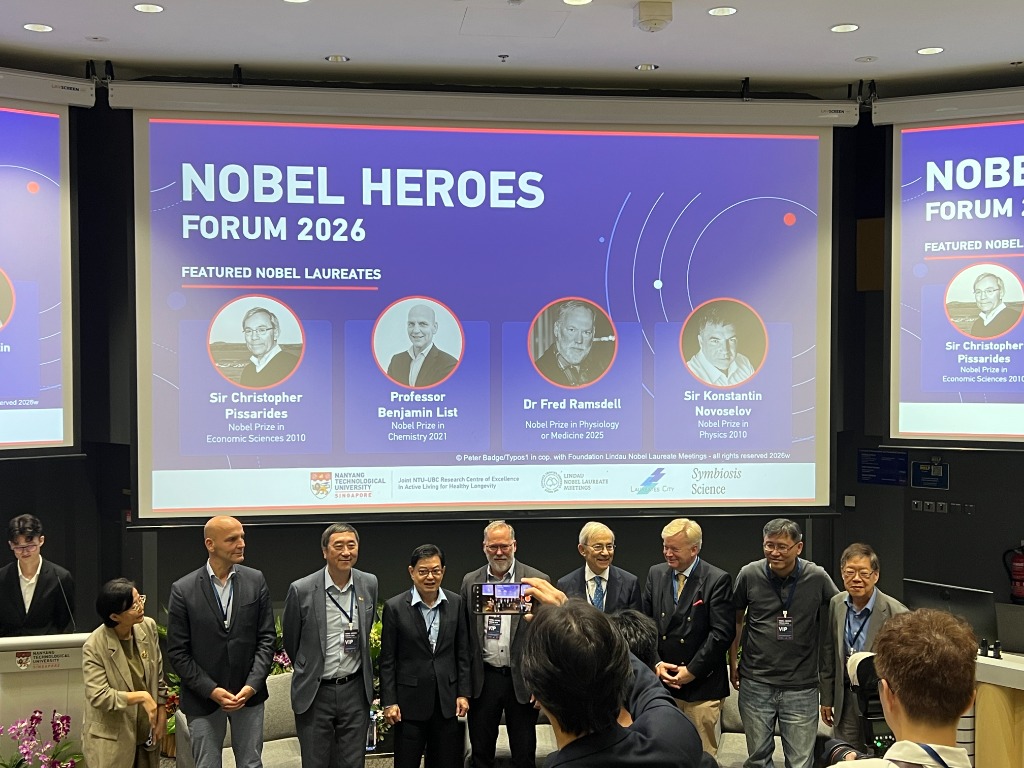
Group photograph on stage of the four Nobel Laureates with university leadership at the Nobel Heroes Forum 2026.
The Nobel Heroes Forum 2026 stage at NTU.From left to right: Professor Benjamin List, Dean Joseph Sung (LKCMedicine), university leadership, Dr Fred Ramsdell, Sir Christopher Pissarides, Sir Konstantin Novoselov, and distinguished guests.
02 The Four Laureates

The minds that
reshaped what is possible.

Each laureate brought a lifetime of questioning the consensus. For a student learning to think at the intersections, their stories offered a masterclass in courage.

Dr Fred Ramsdell

Nobel Prize in Physiology or Medicine 2025

Medicine
The BreakthroughCo-discovery of the FOXP3 gene and its pivotal role as the master regulator of regulatory T cells (Tregs), unlocking immune tolerance and modern immunotherapy.

As an aspiring physician, hearing Dr Ramsdell speak felt deeply personal. His work solved an enigma that baffled immunologists for decades: how the body prevents its own immune system from attacking itself. In person, he spoke not of personal glory, but of the patients whose autoimmune conditions and cancer treatments now rest on those fundamental cellular insights.
Professor Benjamin List

Nobel Prize in Chemistry 2021

Chemistry
The BreakthroughDevelopment of asymmetric organocatalysis, proving that simple organic molecules can act as precise, non-toxic catalysts without relying on heavy metals.

Professor List radiates sheer, childlike enthusiasm for discovery. When he asked the room why catalysts had to be complex, expensive enzymes or toxic transition metals when a simple amino acid like proline could do the job, it was a reminder that true innovation often lies in daring to test the simplest hypothesis that everyone else overlooked.

Sir Christopher Pissarides

Nobel Prize in Economic Sciences 2010

Economics
The BreakthroughAnalysis of markets with search frictions, shaping our modern understanding of labor markets, employment transitions, and public policy.

Sir Christopher grounded the afternoon in human and economic reality. His reflections on the “Longevity Economy” resonated directly with my BioBusiness studies: scientific breakthroughs in therapeutics mean little if healthcare financing and societal structures cannot support people living healthy, dignified, productive lives well into their nineties.

Sir Konstantin Novoselov

Nobel Prize in Physics 2010

Physics
The BreakthroughIsolation and characterization of graphene, a single-atom-thick layer of carbon, through the famous Scotch-tape method during playful “Friday evening experiments.”

Sir Konstantin embodies the fearless tinkerer spirit that I love in engineering and prototyping. In a panel on AI in science, he cautioned that computational tools can find correlations, but cannot replace the human intuition and whimsical curiosity that tries something “unreasonable” just to see what happens.

03 The Panels

AI, Longevity, and
the Human Element.

Two panels probed the questions defining modern discovery: how computation accelerates hypothesis generation, and what healthcare must look like in an aging world.

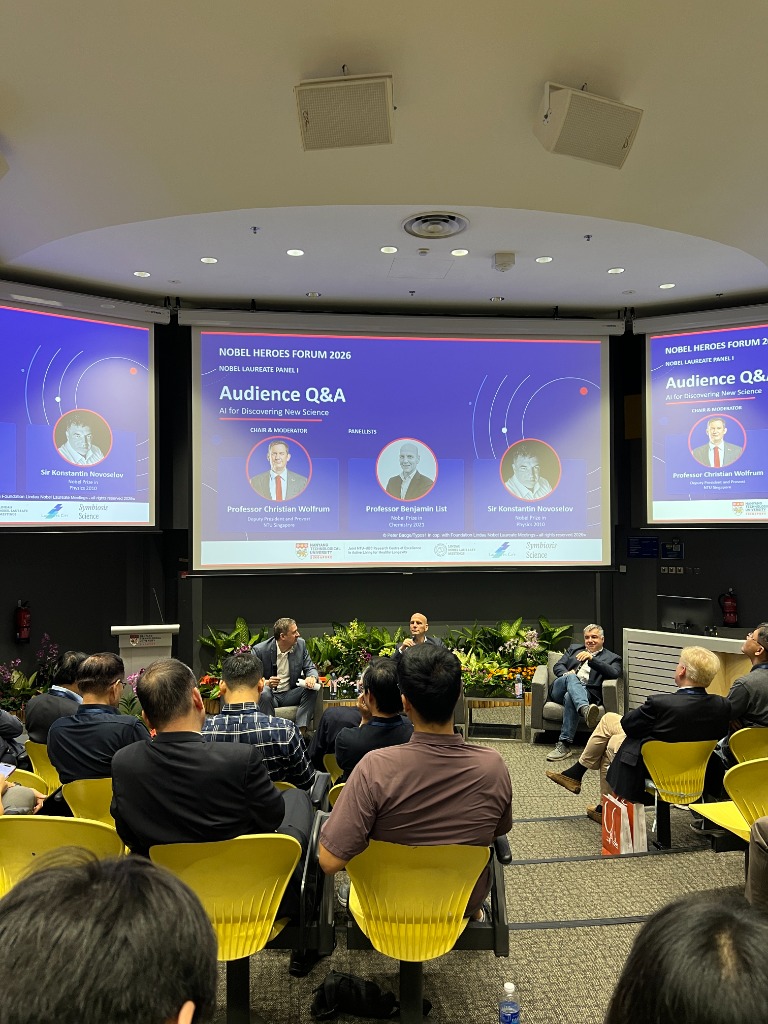
Panel I: Audience Q&A on AI for Discovering New Science with Professor Benjamin List and Sir Konstantin Novoselov.

Panel I · Discovering New Science

AI for Discovering New Science.

Panellists: Prof Benjamin List & Sir Konstantin Novoselov
Moderator: Prof Christian Wolfrum (Provost, NTU)

Can artificial intelligence formulate hypotheses, or is it fundamentally an extrapolator of existing literature? Prof List and Sir Konstantin shared candid thoughts on how generative models accelerate molecular screening, but emphasized that serendipity still requires human presence.

“AI can help you search the map faster, but it doesn't choose which ocean to sail into.”

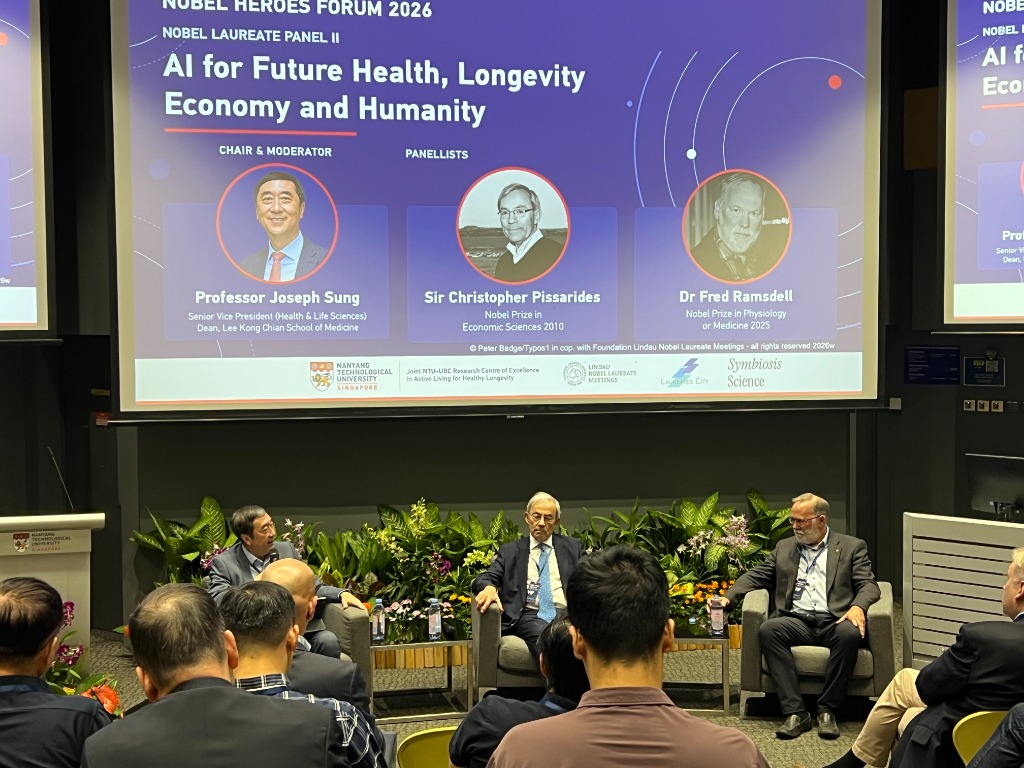
Panel II: AI for Future Health, Longevity Economy and Humanity with Professor Joseph Sung, Sir Christopher Pissarides, and Dr Fred Ramsdell.

Panel II · Future Health & Humanity

AI for Future Health, Longevity Economy & Humanity.

Panellists: Dr Fred Ramsdell & Sir Christopher Pissarides
Moderator: Prof Joseph Sung (Dean, LKCMedicine)

Moderated with great warmth by Professor Joseph Sung, this panel brought the biological mechanisms of immune senescence together with macroeconomic labor dynamics.

Dr Ramsdell outlined the frontier of immune reprogramming, while Sir Christopher challenged the room on the societal safety nets required when life expectancy outpaces traditional retirement models.

04 Personal Reflection

What it meant to
stand beside them.

When the formal proceedings wrapped up and students surged forward, I had the privilege of speaking directly with Dr Fred Ramsdell and Professor Benjamin List.

Growing up reading about Nobel Prizes in books, there is an unspoken assumption that laureates belong to a distant, rarefied stratosphere. But standing right next to Dr Ramsdell and Professor List, what struck me most was their accessibility, their genuine warmth, and how eagerly they listened to young students asking about their work.

When I spoke with them, what resonated was how generously they shared their time. Dr Ramsdell's badge read “VIP”, but his demeanour was that of an elder scientist cheering on the next generation of researchers and future clinicians.

“Science doesn't belong to the laureates. It belongs to anyone humble enough to look closely, curious enough to question the answers, and persistent enough to keep building for people.”

— Personal reflection after the Nobel Heroes Forum, 6 October 2026

As someone working toward a future in medicine and healthcare innovation, this afternoon crystallized my commitment. Whether I am examining genetic discrimination in healthcare insurance through my URECA research, prototyping assistive devices like MOKneeTOR and DreamCatcher, or learning the business frameworks of bioentrepreneurship for my upcoming Copenhagen exchange—it all converges on this standard:

Grounded by Science. Built for People, always.

Return to Notes from the Journey